
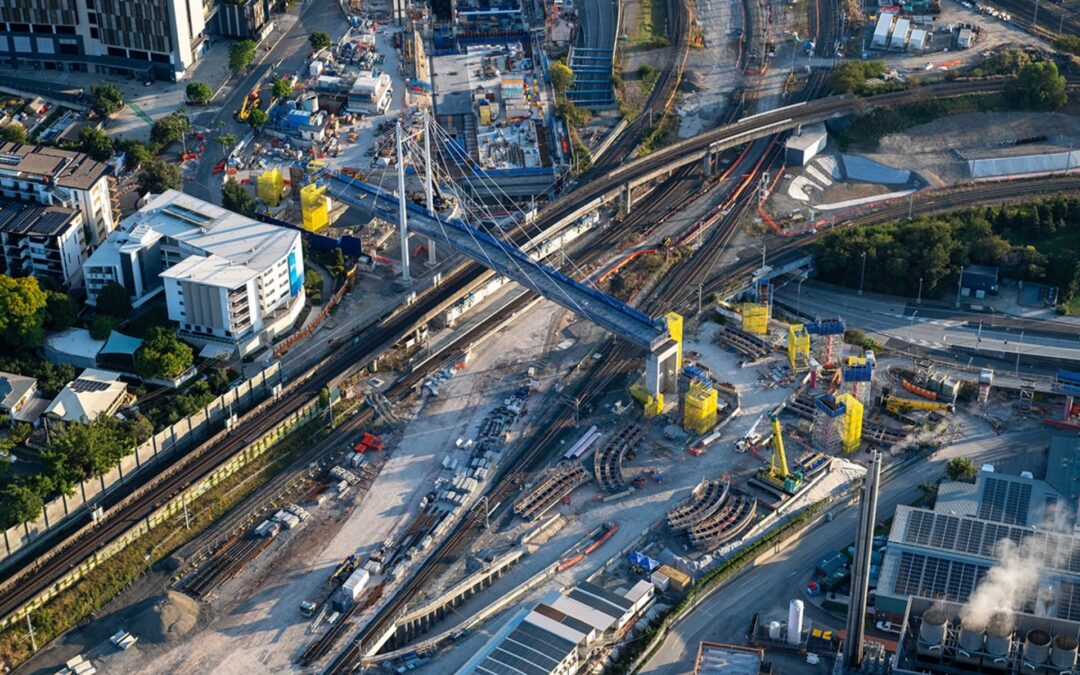
Brisbane is entering one of the most significant periods of infrastructure investment and urban change in its history.
With the 2032 Olympic and Paralympic Games now less than six years away, major projects are moving from planning into construction, while new developments are reshaping some of Brisbane’s key precincts.
From Cross River Rail and Brisbane Metro to the transformation of Victoria Park and the redevelopment of Northshore Hamilton, the changes underway are about much more than hosting the Games.
For property buyers, the more important question is how this investment will change the way Brisbane works, where people live and how different suburbs connect to employment, transport, recreation and essential services.
Here’s a look at some of the key projects and developments to watch.
Victoria Park: a major transformation is now underway
One of the biggest milestones in Brisbane’s Olympic infrastructure program came in June 2026, when initial works officially began at Victoria Park / Barrambin.
The Games Independent Infrastructure and Coordination Authority (GIICA) commenced site preparation, investigations, early enabling works and the establishment of construction areas for the new Brisbane Stadium on 1 June 2026.
This marks the beginning of a major transformation for one of Brisbane’s largest inner-city green spaces.
The new Brisbane Stadium will host the opening and closing ceremonies, as well as athletics events, during the 2032 Olympic and Paralympic Games. With a permanent capacity of 63,000 seats and the ability to accommodate up to 70,000 concertgoers, the venue is being designed as Brisbane’s major sporting and entertainment destination long after the Games.
Following 2032, the stadium is set to become the new home of the Brisbane Lions, Brisbane Heat and Queensland Bulls, while also hosting international cricket, including Test, One Day and T20 matches.
That longer-term use is particularly important when considering the potential impact of the project on surrounding suburbs. This isn’t simply a venue that will be busy for a few weeks in 2032. It is intended to become a permanent sporting and entertainment destination for Brisbane.
The broader Victoria Park transformation will also include significant improvements to the surrounding parklands, pedestrian and cycling connections, recreation areas and public spaces.
The precinct is expected to retain a strong focus on open space, while creating better connections between the park, surrounding suburbs and the CBD.
For property buyers, this puts suburbs including Herston, Kelvin Grove, Spring Hill, Windsor, Bowen Hills and Fortitude Valley on an interesting long-term infrastructure watchlist.
However, proximity to an Olympic venue shouldn’t be viewed as a guarantee of future capital growth. The more important consideration is whether the infrastructure creates a lasting improvement to the area’s accessibility, amenity and overall liveability.
Cross River Rail
One of the biggest milestones in Brisbane’s Olympic infrastructure program came in June 2026, when initial works officially began at Victoria Park / Barrambin.
The Games Independent Infrastructure and Coordination Authority (GIICA) commenced site preparation, investigations, early enabling works and the establishment of construction areas for the new Brisbane Stadium on 1 June 2026.
This marks the beginning of a major transformation for one of Brisbane’s largest inner-city green spaces.
The new Brisbane Stadium will host the opening and closing ceremonies, as well as athletics events, during the 2032 Olympic and Paralympic Games. With a permanent capacity of 63,000 seats and the ability to accommodate up to 70,000 concertgoers, the venue is being designed as Brisbane’s major sporting and entertainment destination long after the Games.
Following 2032, the stadium is set to become the new home of the Brisbane Lions, Brisbane Heat and Queensland Bulls, while also hosting international cricket, including Test, One Day and T20 matches.
That longer-term use is particularly important when considering the potential impact of the project on surrounding suburbs. This isn’t simply a venue that will be busy for a few weeks in 2032. It is intended to become a permanent sporting and entertainment destination for Brisbane.
The broader Victoria Park transformation will also include significant improvements to the surrounding parklands, pedestrian and cycling connections, recreation areas and public spaces.
The precinct is expected to retain a strong focus on open space, while creating better connections between the park, surrounding suburbs and the CBD.
For property buyers, this puts suburbs including Herston, Kelvin Grove, Spring Hill, Windsor, Bowen Hills and Fortitude Valley on an interesting long-term infrastructure watchlist.
However, proximity to an Olympic venue shouldn’t be viewed as a guarantee of future capital growth. The more important consideration is whether the infrastructure creates a lasting improvement to the area’s accessibility, amenity and overall liveability.
Brisbane Metro continues to expand
Brisbane Metro is another important part of the city’s future transport network.
The first two Metro routes are now operating, with the M1 running between Eight Mile Plains and Roma Street and the M2 connecting UQ Lakes Station with the Royal Brisbane and Women’s Hospital. The services provide high-frequency, high-capacity public transport through some of Brisbane’s busiest corridors.
Council is also investigating the next stage of the network.
Four priority corridors are being considered:
- Southern Metro: CBD to Springwood
- Eastern Metro: CBD to Capalaba
- Northern Metro: CBD to Carseldine
- Airport Metro: CBD to Brisbane Airport
The proposed expansion would improve connections into Brisbane’s northern, eastern and southern suburbs and potentially create stronger public transport connections between the CBD and airport. (Brisbane City Council)
It is important to distinguish between projects that are funded and under construction and projects that are still being investigated.
For buyers, proposed infrastructure can be worth considering when assessing the future of an area, but it shouldn’t be treated as a guaranteed benefit until funding, timing and delivery are confirmed.
Northshore Hamilton: 2,200 new homes planned
Another major announcement in September 2026 highlights how Brisbane’s infrastructure story is closely connected to housing and urban renewal.
The Queensland Government has confirmed plans for the redevelopment of the former industrial site at Northshore Hamilton, which had previously been earmarked as the potential athletes’ village for the 2032 Olympic and Paralympic Games.
Five developers have been selected to deliver almost 2,200 new homes across 13 towers, alongside a 50-bed hotel, supermarket and more than 21,000 square metres of retail and dining space. The first residents are expected from 2031.
The 6.1-hectare site is one of Brisbane’s significant remaining riverfront development opportunities and is expected to accommodate thousands of new residents once completed.
The Queensland Government is also investing $154 million in enabling infrastructure for the precinct, including roads, water and sewer infrastructure.
The development demonstrates the scale of growth occurring around Brisbane ahead of 2032.
It also highlights an important consideration for property buyers: infrastructure and housing supply are closely connected.
Thousands of new residents will require transport, retail, recreation, schools, health services and other amenities. As new communities develop, the infrastructure supporting them can have just as much influence on an area’s long-term appeal as the homes themselves.
Northshore is also well positioned near Hamilton, Ascot, Hendra, the Brisbane River and Brisbane Airport, making the precinct one to watch as Brisbane’s inner north continues to evolve.
Read the ABC’s full coverage of the Northshore Hamilton announcement
Active transport and Brisbane’s green bridges
Not all of Brisbane’s infrastructure investment is about trains, roads and major venues.
Walking and cycling infrastructure is also becoming an increasingly important part of the city’s future.
Brisbane City Council’s Games transport legacy proposal includes projects such as the Toowong to West End Bridge, City Reach Boardwalk, active transport upgrades and mobility connections across the inner city.
Victoria Park is another example, with plans for improved cycling and pedestrian connections between surrounding suburbs and the CBD.
These projects can have a less obvious impact on property than a new railway station, but improved walkability, access to green space and the ability to travel without a car are increasingly important factors for many buyers.
Brisbane’s wider transport network
The infrastructure program extends well beyond the CBD and Olympic venues.
Brisbane City Council has identified 18 Games-ready transport initiatives across four key areas: mass transit, active transport, future transport and universal accessibility.
These include potential Metro expansions, improvements to ferry services, active transport projects, the Hamilton to Woolloongabba Gold City Glider and restoration work for the Story Bridge.
The broader South East Queensland network is also being upgraded, with major projects outside Brisbane contributing to better regional connectivity.
For property buyers, this reinforces the importance of looking beyond the boundaries of a single suburb. A new piece of infrastructure can change the accessibility of an entire network of locations.
What does all this mean for Brisbane property?
Infrastructure can be an important factor when assessing property, but it shouldn’t be treated as a shortcut to predicting capital growth.
A new station, stadium or major development doesn’t automatically mean surrounding properties will outperform.
Instead, infrastructure is best considered alongside the fundamentals of a location, including:
- Supply and future development
- Owner-occupier demand
- Rental demand
- Employment
- Schools and education
- Existing lifestyle amenity
- Transport accessibility
- Land scarcity
- Property type and quality
- Comparable sales
The timing and certainty of infrastructure is also important.
There is a significant difference between a project that is already under construction, such as Cross River Rail and the initial works at Victoria Park, and a project that is still being investigated, such as some of the proposed Brisbane Metro expansions.
Similarly, major new developments such as Northshore Hamilton can bring significant new housing supply into an area, which needs to be considered alongside the potential benefits of additional retail, employment and amenity.
For buyers, understanding both sides of that equation is important.
The Olympics are a catalyst, not the whole story
Brisbane’s infrastructure story is ultimately much bigger than the 2032 Olympic and Paralympic Games.
The Games are providing a major catalyst for investment, but many of the projects being delivered or investigated are responding to challenges Brisbane already faces: population growth, housing demand, transport capacity and the need for better connections between suburbs and employment centres.
Brisbane City Council describes the Games as an opportunity to create benefits that begin well before 2032 and continue long after the Games have finished.
That long-term legacy is perhaps the most interesting part of the story for property buyers.
Victoria Park will become a permanent sporting and entertainment precinct. Cross River Rail will increase rail capacity. Brisbane Metro could eventually extend high-frequency public transport into more parts of the city. Northshore Hamilton is being transformed from former industrial land into a new residential and commercial precinct.
Together, these projects are helping reshape how Brisbane will function over the next decade and beyond.
For property buyers, the question isn’t simply:
“Which suburbs are close to the Olympics?”
A better question is:
“Which parts of Brisbane are becoming better connected, better serviced and more liveable as the city grows?”
That is where infrastructure can have a lasting influence on property demand.
Looking to buy in Brisbane?
Infrastructure should form part of a property assessment, but it should never be the only reason to buy.
At PMC Property Buyers, we look at the bigger picture, including location, supply, demand, comparable sales, future development, infrastructure and the fundamentals of the individual property.
Because while major projects can create opportunities, understanding what has already been priced into the market, what is actually being delivered and how an area will function once the headlines have moved on is just as important.
If you’re considering buying in Brisbane ahead of 2032, our team can help you look beyond the Olympic hype and understand how Brisbane’s changing infrastructure could affect the locations and properties you’re considering.
Have a conversation with our Brisbane Buyers Agents today.