
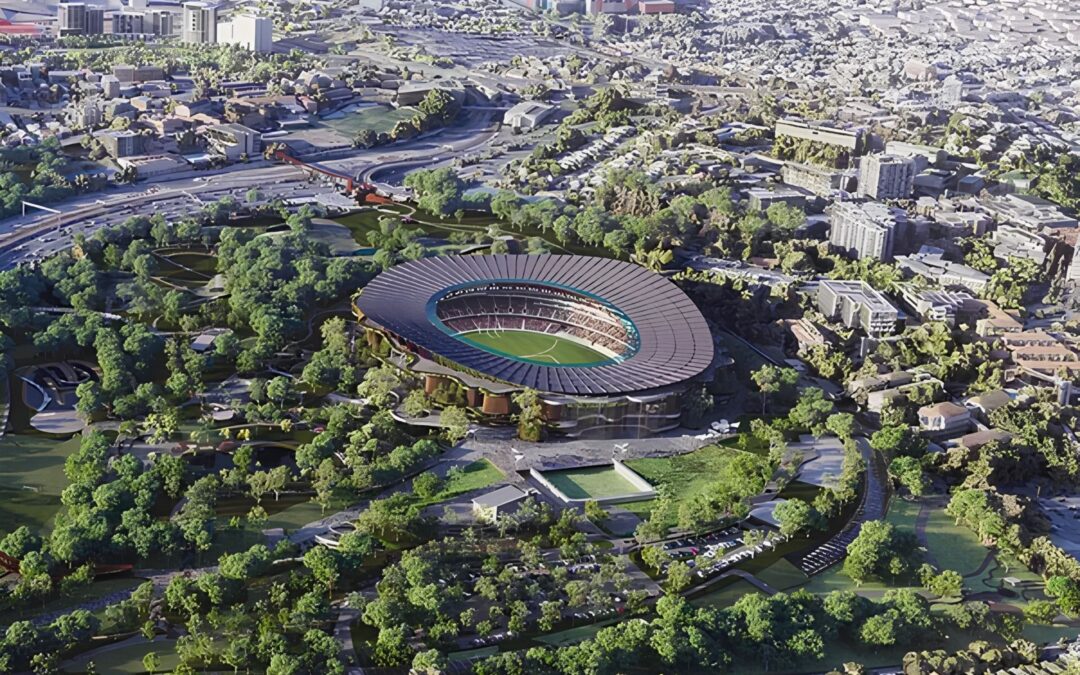
After years of political debate, venue changes and planning delays, Brisbane’s proposed Olympic stadium at Victoria Park Barrambin has moved significantly closer to construction. While major approvals have now been secured, workforce shortages and ongoing community opposition continue to shape the conversation around the project.
Key Figures
- $3.8B estimated stadium cost
- 63,000 seat capacity
- 1 June 2026 preparatory works begin
- 2031 target completion
Brisbane’s main Olympic stadium at Victoria Park Barrambin is edging closer to becoming a reality.
Since Brisbane secured the 2032 Olympic and Paralympic Games in 2021, the project has faced years of political backflips, venue uncertainty and public debate. Now, with federal environmental approval secured and land transfer arrangements finalised, preparatory works are officially set to begin from 1 June 2026.
Where the project stands today
In May 2026, the Federal Department of Climate Change, Energy, the Environment and Water granted environmental approval for the project, removing one of the final major barriers to construction.
The Queensland Government also passed amendments to the Land Act to allow the Victoria Park site, previously managed under a Deed of Grant in Trust by Brisbane City Council, to transition into freehold tenure. Control of the land formally transferred to the Games Independent Infrastructure and Coordination Authority (GIICA) ahead of early works commencing.
“The likely date for shovels in the ground for the main stadium would be 2026 or 2027.” — Stephen Conry, GIICA Chairman
Construction timeline
May 2023 – Victoria Park Barrambin is confirmed as the preferred site for Brisbane’s new Olympic stadium following ongoing debate around the Gabba redevelopment.
August 2024 – Arup is appointed to lead the masterplanning of the broader Victoria Park precinct, with expressions of interest opened for the stadium design team.
January 2025 – COX Architecture, HKS and Japanese firm Azusa Sekkei are announced as part of the design consortium, alongside engineering firms Arup and Bligh Tanner.
February 2025 – Queensland Parliament passes legislation enabling the land tenure conversion required for GIICA to assume control of the site.
May 2026 (present) – Federal environmental approval is granted, allowing the project to proceed to the next stage.
June 2026 – Preparatory works including site establishment and early earthworks officially begin.
2028–2029 – Major construction and substructure works are expected to ramp up following detailed design and procurement phases.
2031 –The stadium is targeted for completion ahead of the Brisbane 2032 Olympic and Paralympic Games.
The design vision
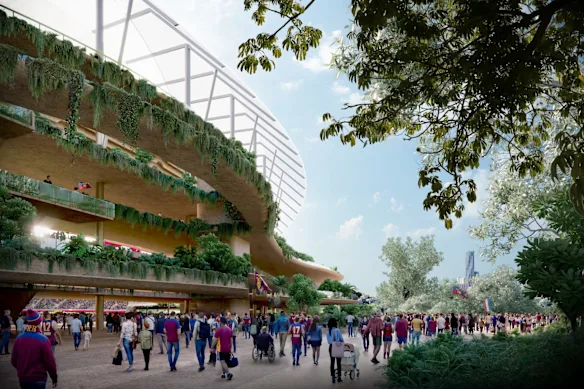
Early concept designs show a stadium intended to integrate with the surrounding Victoria Park landscape rather than dominate it.
The broader precinct vision includes:
- Expanded parklands and green space
- Pedestrian and cycling connections
- Public plazas and viewing areas
- Improved transport access
- Recreation-focused community spaces
Following the Games, the venue is expected to become Brisbane’s primary stadium for major sporting events, concerts and entertainment, with the Brisbane Lions, Queensland Bulls and Brisbane Heat all flagged as future tenants.
Workforce pressure remains a major challenge
While planning approvals have progressed, workforce shortages continue to present one of the project’s biggest risks.
Construction Skills Queensland estimates the broader Olympic infrastructure pipeline could place significant pressure on the state’s labour market over the next decade, particularly during peak construction years between 2027 and 2029.
Workforce snapshot
- 285,000 current Queensland construction workers
- 35,000 projected workforce shortfall at peak demand
- ~20% workforce increase required during peak periods
- $77B projected Queensland construction pipeline by 2027
According to CSQ’s Horizon 2032 report, Queensland’s construction pipeline is expected to grow substantially in the lead-up to the Games, intensifying competition for skilled workers across both public and private projects.
The industry is also facing declining apprenticeship commencements and ongoing retention challenges, placing additional pressure on labour supply.
Community opposition remains a challenge
Despite recent approvals, the project remains controversial.
Victoria Park Barrambin is heritage-listed and holds significant cultural importance for First Nations communities. Advocacy groups and local residents continue to raise concerns around environmental impacts, loss of green space, heritage protection and long-term project costs.
Several cultural heritage protection applications relating to the site also remain under review.
A project finally moving forward
Although debate surrounding the Victoria Park stadium is far from settled, the project is now materially closer to construction than at any point since Brisbane won the Olympic bid.
With early works beginning, attention now turns to detailed design, procurement and whether Queensland can deliver one of the country’s largest infrastructure projects on time and within budget ahead of Brisbane 2032.
Thinking about buying in Brisbane ahead of the 2032 Olympics?
Major infrastructure projects and urban renewal can create new opportunities, but not every suburb will benefit in the same way. Whether you’re buying a home or an investment, our Brisbane buyers agents can help you cut through the hype, identify locations with genuine long-term potential, and make a confident, informed purchase. Get in touch with PMC Property Buyers to discuss your property goals.